
On July 4th, 1980, my friends opened “Watchman Wicker”, a street vending business in Washington, DC. A vendor license could be purchased for $25 allowing one to display goods on a 4’x8’ table in select areas of the city.
When my friend shared that to secure one of the 13 coveted spots in Georgetown for the robust Saturday sales, he needed to sleep on the sidewalk Friday night, I thought he was nuts. But two months later, starting my senior year at the University of Maryland, I needed cash, so I became… a street vendor.
Friday afternoon, after classes, I boarded the metro to Connecticut Avenue NW, between M and L streets, where my friends had worked their Friday display. The merchandise and table were loaded into a van, and I was deposited in Georgetown. I’d set up my goods at the corner of Wisconsin Avenue and Prospect Street and start selling to pedestrians strolling the sidewalks. Business continued until the streets quieted down, usually after 11 pm. Then I’d pack my merchandise under the table, crawl into a sleeping bag, and place my feet in the large baskets that would not fit under the table. I’d wake Saturday morning in the cool fall air, climb from my brick sidewalk bed, use a bathroom at a nearby hotel, and set up my display of wicker wares for a promising day of sales.
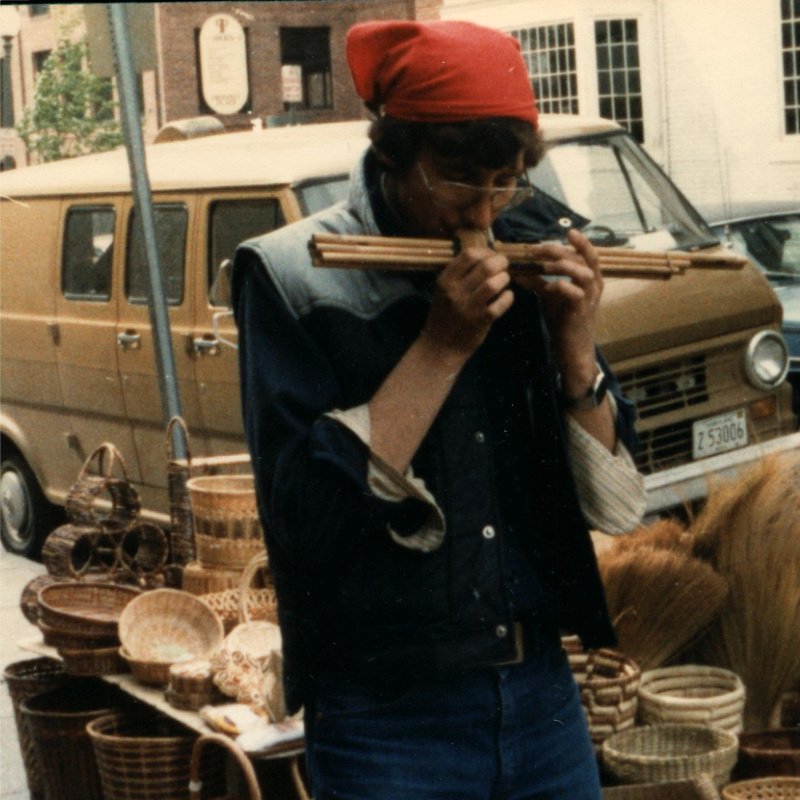
You learn a lot about life and the city this way, though I wouldn’t recommend it. Cell phones didn’t exist then, so guys talking to themselves as they sauntered down the street stood out. They weren’t on bluetooth, but they were on something, or missing something.
One evening, an older man with a blanket wrapped about him asked if he could borrow one of our Asian mugs which were for sale on the table. We gave it to him, and he returned an hour later, with over $100 in the mug. I remember wondering whether I was in the right business.
In time, I got to know the street people personally. One of the more colorful was “Sky King,” an African American dressed as an impressive Native American. I never knew him to be in a conversant state, but rumor was that he had once been a prominent DC chef until he found his wife cheating on him. Stories like that were not uncommon.
George I came across one Saturday morning, bleeding and looking a mess. He had been hired to hold a vendor’s spot for the night, and someone had set upon him. I helped patch him up as best I could. He was a close friend afterward, and we helped each other often. I grieved a decade later when I heard he was found one winter morning frozen on the steps of a city church.
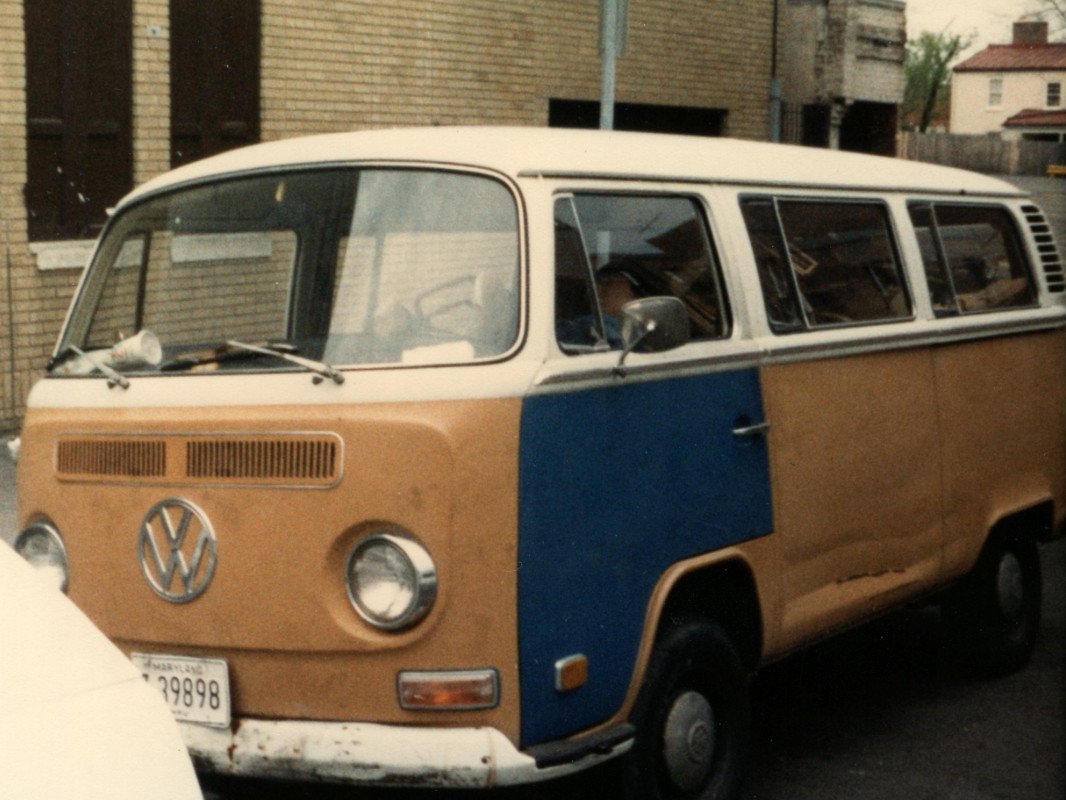
Come winter, the van would remain overnight, and two of us would sleep there. I remember one especially cold night when we had 3-4 street people bedding down with us in that van. Some on the street were mentally troubled. Others were just avoiding growing up.
Tim was in the former group: a Vietnam vet who had witnessed horrendous action, and leaned on the bottle. Solid and likable, we developed a friendship, and he came to live with us in Maryland. Tim got sober, started attending church, and eventually landed a job. Unfortunately, with his first paycheck he disappeared. My guess is: The temptation was too great. It was several years later we heard from the street that he had died of liver problems.
Dudley Ware was in the second group. He grew up in Odessa, Texas, which back then was a dying west Texas town. He was the spitting image of John Denver and always carried with him a duffel bag of toiletries, so he was clean and smelled… well, he had essential oils before they became a thing. Dudley also lived with me.
Dudley was… creative. While I was at work, he dyed some of my shirts tan in the washing machine. They were his now. The day he disappeared, it was with my favorite McCloud-style winter coat and some cash, that I guess were his now also.
Georgetown night-life contained a spectrum from the wealthy to the desperate, the friendly to the dangerous. One of the more surreal events was the weekly showing of the Rocky Horror Picture Show, a movie whose plot is innocence lost in the eerie mansion of a transvestite scientist. This 1975 film built a cult following of people who came weekly in costume with props to act out the story, shouting their favorite quotes during the showing. The line waiting for the movie wound onto Prospect Street every week in front of my wicker display. The Star Wars Mos Eisley Cantina was tame compared to this group.
I’d strike up conversation with the fans, looking to connect. They weren’t wicker customers, and not many sales happened while they waited for the theatre to open. I painfully recall two girls, maybe 12 years old, dressed only in provocative black underwear. And it was cold out. I conversed with them, but my ability to help or influence was severely limited. I offered them my coat, which they refused. Grieved at what could be the potential outcome of their foolishness, I prayed for God’s merciful intervention.
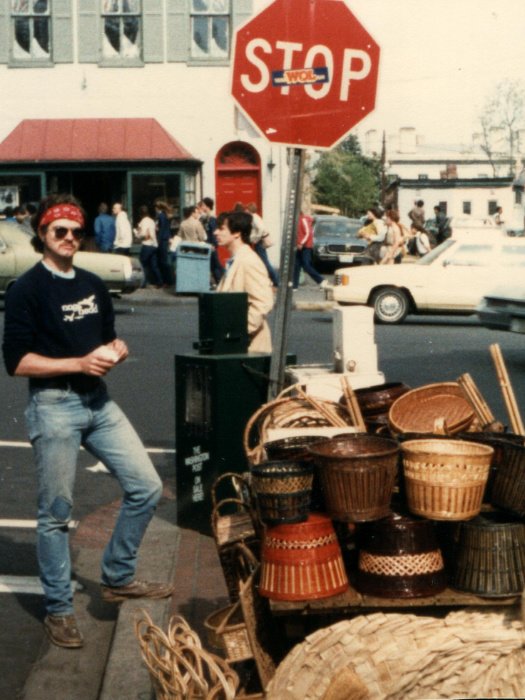
But probably my most painful city memory happened late one night. I was taking my display down near midnight. A large white car stopped short about twenty feet away, a girl stumbled out, and the car sped away. I watched the girl, looking very shaken, start walking down the street towards the residential section.
She suddenly came running back towards me, crying hysterically, “I just got raped, and I can’t find my car!” Her wounds were so fresh it was gut-wrenching. I could not get physically close, understandably, but tried with words and presence to care and comfort. I walked down the darkened neighborhood streets with about 10’ distance between us, trying to keep her present and focused. While walking, I learned she had got disoriented when she left her car and someone had stopped and offered her a ride.
Encouragements to notify the police were strongly resisted. Her sobbing, shaking, erratic protective body maneuvers, and confused speech displayed her profound state of shock. She clearly was not in a condition to drive. I offered to drive her, which was unsurprisingly refused. Just how to care, comfort, and protect—not just her, but others? How forceful should one be with someone who had just been forced upon? I was praying earnestly, silently, but at a loss.
We found her car. She fumbled terribly with the keys. Once locked inside her car, she started the engine and drove quickly away. I tried to note the license plate and vehicle make. I don’t know cars well, although I remember Virginia plates. As I walked back to my partially disassembled display, I kept an eye out for an officer. Remember, no cell phones back then. I soon spotted one on Wisconsin Avenue and shared what happened. Then it was back to my table, packing up the rest of the display, curling up in my sleeping bag and trying to sleep, Georgetown still active around me.
Several hours later I was awakened by a kick in my side. Looking up I saw a detective and two police officers. The detective disdainfully asked if I was the person who made the report. I attempted to look respectable and competent as I crawled out of my sidewalk bed, and shared the details. The important questions I regretfully could not answer. I had no concrete ID on the perpetrator’s car, and never saw the driver. Dissatisfied, they turned to go. I laid back down on the sidewalk, praying fervently for a girl I didn’t know.
I’ve thought about her from time to time over the past 40 years. She would be in her 60s now, if still alive. And what about the rapist? What happened to him? Apart from the undeserved mercy of a God risen from a blood-stained cross, his eventual outcome, like my own, would be far more horrific than the events of that night.
How does one process the dark and the light, the beautiful and the wretched, found in a city, or in any place for that matter? I was listening to The Wonderful Works of God by Dutch theologian Herman Bavinck (1854-1921), and this quote caught my attention. Speaking about mankind, he shares:
They seek Him (God) and at the same time they flee Him. They have no interest in a knowledge of His ways, and yet they cannot do without Him. They feel themselves attracted to God, and at the same time repelled by Him.
In this, as Pascal so profoundly pointed out, consists the greatness and the miserableness of man. He longs for truth, and is false by nature. He yearns for rest, and throws himself from one diversion upon another…
Science cannot explain this contradiction in man. It reckons only with his greatness, and not with his misery. Or only with his misery and not with his greatness. It exalts him too high, or it depresses him too far. For science does not know of his divine origin, nor of his profound fall. But the Scriptures know of both, and they shed their light over man and over mankind. And the contradictions are reconciled. The mists are cleared. And the hidden things are revealed.
Man is an enigma whose solution can be found only in God.
And, I would add by extension, so also are cities.
Steve
Love this and the truth that only through God and His word can we truly understand ourselves! Keep writing Brother ✍️📝
Wow, Steve, reading this makes me glad I didn’t street vend any more than I did! Some of what you wrote here makes a fictionalized appearance in my upcoming novel, and one character is actually a composite of several dear friends from that era, including you. Keep on writing; you’ve go much to say and do it well.
Steve, wow. What stories you have to tell. I very much want to read more. These vignettes are heartbreaking and powerful.
So very well captured Steve…the reality of light and darkness. May your words lead others to the One Light that dispels every darkness.
Blessings!
Wow! I would never imagined that was your life! God certainly has done miracles in your life! I LOVE your writings. You are very good at it! Thank you for sharing!!!
Thanks so much for capturing this and sharing. Yes, we both long for and flee from God. We would much prefer a god we could tame…But the God we serve is MUCH bigger and better than that! May these stories provoke me to carry the light into the dark world around me…